

What is Evangelism and Why is it Important? - Joey Ferrell
Evangelism. You may have heard this word many times and not really understand the meaning behind it. After all, you will not find the word evangelism in your Bibles. But, the concept is definitely there, and we must understand the significance and the importance of utilizing evangelism in our day and time.
Evangelism. You may have heard this word many times and not really understand the meaning behind it. After all, you will not find the word evangelism in your Bibles. But, the concept is definitely there, and we must understand the significance and the importance of utilizing evangelism in our day and time.
Definition
Evangelism is derived from the Greek noun that is used for “good tidings” or “messenger.” The Greek word looks very similar to the spelling that we have in evangelism. It is euangelion. You can notice the similarity pretty quickly.
What does it really mean? In brief, it means to tell the Good News of Jesus Christ.
While it would take a very lengthy article and time to fully expound on all of the ways that we can evangelize, what we can look at today is just a touch of how we can jump start a few ideas in which to grow upon.
The Bible clearly has multiple examples of evangelism, especially in the great commission of Matthew 28:18-20, Mark 16:15-16, Luke 8 & 10, Proverbs 11:30, and many more. The “how” isn’t always as clear as they “why.” Here are a few suggestions of how to evangelize in your local area.
Card programs - if you know of people in the community who have had sickness, lost loved ones, had life changes, and so on…a nice greeting card in a timely manner may be more than enough to open a door of opportunity.
Social Media invites - There are many local area groups on Facebook in particular. In our area, there is hardly a week that goes by that someone does not post asking about a “good church” in the area. This is a great way to make an acquaintance. Just don’t be overpowering with the conversation. The goal would be to invite them to visit.
New mover and visitor bags - There are different ways to acquire new mover contacts. One of these is through the House to House mail out program. When you may receive a list of contacts, make up a small gift bag with a couple of tracts, maybe a DVD (you can order some from our website for free), a couple of small goodies like a pen/pencil, not pad, etc. and deliver it to their door step. Even if they are not at home, the bag can be left…just make sure the contact information is there for the church! These are also great for visitors that come to your building for services.
Personal invitation cards - Have some cards printed up with the church name, address, and meeting times only on the front side. On the back of the card, have a place that says “you are invited to come and visit with us. Please show this card to someone to let them know you are looking for me. My name is __________________________. My phone number is (optional) ___________. We look forward to seeing you!” Hand these cards out anywhere and everywhere you come into contact with people.
Example - Make sure that in your daily life that people see Christ within you. Christians should be happy people, and we should be people that want to tell everyone that we can about our happiness and our salvation. We should want to be “messengers of the Good News”….euangelion.
Why is evangelism important? Well, if you have read this far, you probably already have some indication of the importance. The main emphasis is simple…we are commanded by our Lord to tell others, but, the motivation should be that we love our neighbor as much as ourselves…and want to see our neighbor (friend, loved one, etc) in heaven with us.
Let’s get busy! There are souls that need us today…right now!
Our main emphasis at The Gospel of Christ is to Take the Whole Gospel to the Whole World. This is the basis of our evangelistic efforts. We pray that you will see many great resources that you can also use in your own evangelistic efforts from The Gospel of Christ including through our television broadcasts, field representative visits, free media items and our website.
We are currently reaching over 50,000 households each week through our broadcasts across the country, thousands of website visitors each week and hundreds of free media items sent out via mail and digital downloads. This is all made possible by individuals and congregations of the Lord’s church. We hope you will visit a congregation near you soon. Find our supporting congregations at www.findthelordschurch.com.
Until next time…
Joey

"Sojourner or Settler?" - G. Scott Furniss
There is a popular hymn entitled “This world is not my Home” with the words, “This world is not my home. I am just a passing through.” I hear preachers speaking of a renewed earth as if this is our world. I listen to Christians talking about politics, elections, and other worldly things more than spiritual things and I am worried too many Christians are becoming settlers in this world instead of sojourners just passing through. They speak more of this world and fight harder to keep things in order in this country than they speak of their home and fight for Christ and His kingdom.
There is a popular hymn entitled “This world is not my Home” with the words, “This world is not my home. I am just a passing through.” I hear preachers speaking of a renewed earth as if this is our world. I listen to Christians talking about politics, elections, and other worldly things more than spiritual things and I am worried too many Christians are becoming settlers in this world instead of sojourners just passing through. They speak more of this world and fight harder to keep things in order in this country than they speak of their home and fight for Christ and His kingdom. We need to remember we are aliens and pilgrims in this world and are supposed to be sojourners and not settlers. “ These all died in faith, not having received the promises, but having seen them afar off [e]were assured of them, embraced them and confessed that they were strangers and pilgrims on the earth. 14 For those who say such things declare plainly that they seek a homeland. 15 And truly if they had called to mind that country from which they had come out, they would have had opportunity to return. 16 But now they desire a better, that is, a heavenly country. Therefore God is not ashamed to be called their God, for He has prepared a city for them” (Hebrews 11:13-16 NKJV).
The sojourner declares he is an alien and a pilgrim in this world making it clear they are seeking a country of their own so God is not ashamed to be our God. They also abstain from fleshly lusts which war against our souls.
Beloved, I beg you as sojourners and pilgrims, abstain from fleshly lusts which war against the soul, 12 having your conduct honorable among the Gentiles, that when they speak against you as evildoers, they may, by your good works which they observe, glorify God in the day of visitation (1 Peter 2:11-12 NKJV).
When we think of these things let us look at three tests of whether we are sojourners or settlers. First, where Is Your Citizenship? “For our citizenship is in heaven, from which we also eagerly wait for the Savior, the Lord Jesus Christ, 21 who will transform our lowly body that it may be conformed to His glorious body, according to the working by which He is able even to subdue all things to Himself.” (Philippians 3:20-21 NKJV).
While Daniel, Ezra, and Nehemiah show us we should be good citizens of whatever country we find ourselves in this world, but we have to be careful how entangled we get with the affairs of this life as we engage in the warfare of the kingdom. The settler’s concern is their earthly country and rulers, the sojourner’s concern is their heavenly country and king?
The second test is where is Your Treasure? Jesus told us to be careful of our attitude towards the things of this life. “Do not lay up for yourselves treasures on earth, where moth and rust destroy and where thieves break in and steal; 20 but lay up for yourselves treasures in heaven, where neither moth nor rust destroys and where thieves do not break in and steal. 21 For where your treasure is, there your heart will be also” (Matthew 6:19-21 NKJV).
We need to have the attitude of Job. “Then Job arose, tore his robe, and shaved his head; and he fell to the ground and worshiped. 21 And he said: “Naked I came from my mother’s womb, And naked shall I return there. The Lord gave, and the Lord has taken away; Blessed be the name of the Lord.” 22 In all this Job did not sin nor charge God with wrong (Job 1:20-22 NKJV). We must heed the warning of Paul. “Now godliness with contentment is great gain. 7 For we brought nothing into this world, [d]and it is certain we can carry nothing out. 8 And having food and clothing, with these we shall be content. 9 But those who desire to be rich fall into temptation and a snare, and into many foolish and harmful lusts which drown men in destruction and perdition. 10 For the love of money is a root of all kinds of evil, for which some have strayed from the faith in their greediness, and pierced themselves through with many sorrows (1 Timothy 6:6-10 NKJV).
The Settler’s concern is his savings, the sojourner’s concern is his salvation?
The third test is where is your home. “For we know that if our earthly [a]house, this tent, is destroyed, we have a building from God, a house not made with hands, eternal in the heavens. 2 For in this we groan, earnestly desiring to be clothed with our [b]habitation which is from heaven, 3 if indeed, having been clothed, we shall not be found naked. 4 For we who are in this tent groan, being burdened, not because we want to be unclothed, but further clothed, that mortality may be swallowed up by life. 5 Now He who has prepared us for this very thing is God, who also has given us the Spirit as [c]a guarantee. 6 So we are always confident, knowing that while we are at home in the body we are absent from the Lord. 7 For we walk by faith, not by sight. 8 We are confident, yes, well pleased rather to be absent from the body and to be present with the Lord. 9 Therefore we make it our aim, whether present or absent, to be well pleasing to Him. 10 For we must all appear before the judgment seat of Christ, that each one may receive the things done in the body, according to what he has done, whether good or bad.(2 Corinthians 5:1-10 NASB). Are you more concerned with staying here or do you have the desire to go home? “For to me, to live is Christ, and to die is gain. 22 [u]But if I am to live on in the flesh, this will mean fruitful labor for me; and I do not know [v]which to choose. 23 But I am hard-pressed from both directions, having the desire to depart and be with Christ, for that is very much better; 24 yet to remain on in the flesh is more necessary for your sakes. 25 Convinced of this, I know that I will remain and continue with you all for your progress and joy [w]in the faith, 26 so that your pride in Christ Jesus may be abundant because of me by my coming to you again” (Philippians 1:21-26). The settler wants to stay the sojourner wants to go home.
What is your concern? Country or Kingdom? Savings or Salvation? Stay or go home? So the question we must ask ourselves, is this world your home or are you just passing through? Are your treasures here on earth or are they laid up somewhere beyond the blue? Have you settled in the land or are you a sojourner, a stranger and an alien looking for a city not made with hands, so God is not ashamed to be called your God? God encourages us not to settle down in this world but continue as strangers and aliens here knowing our citizenship is in heaven, serving our king in whatever land we reside, laying up our treasure in heaven so our heart will be there.
G. Scott Furniss

5 Steps to A Stable Relationship with God from Psalm 15 - Ben Bailey
1. The Person Who is Concerned About Living with God Will Have a Stable Relationship with Him. Notice what was on the Psalmist's mind when He asked, “Lord, who may abide in Your tabernacle? Who may dwell in Your holy Hill?” (Psalm 15:1). If a person is concerned about His soul and living with God for eternity, He is not only going to be thinking about that regularly but working toward achieving that goal (Col. 3:1-3).
5 Steps to A Stable Relationship with God from Psalm 15
1. The Person Who is Concerned About Living with God Will Have a Stable Relationship with Him. Notice what was on the Psalmist's mind when He asked, “Lord, who may abide in Your tabernacle? Who may dwell in Your holy Hill?” (Psalm 15:1). If a person is concerned about His soul and living with God for eternity, He is not only going to be thinking about that regularly but working toward achieving that goal (Col. 3:1-3).
2. The Person of Integrity Will have a Stable Relationship with God. The Psalmist answers his own question by stating, “He who walks uprightly, And works righteousness, And speaks the truth in his heart” (Psalm 15:2). Joseph reminds us of real integrity when he was in the house with Potiphar's wife and no one was watching he still said, “How then can I do this great wickedness, and sin against God?” (Gen. 39:9). If you have the integrity to do right simply because it’s the right thing to do, you are on the right track to a stable relationship with God.
3. The Person Who Really Loves His Neighbor As Himself will have a Stable Relationship with God. The Psalmist emphasized our need to love our neighbor when He said, “He who does not backbite with his tongue, Nor does evil to his neighbor, Nor does he take up a reproach against his friend” (Psalm 15:3). How we treat other people is a direct indicator of how much we love God and are concerned about our relationship with Him. The Apostle John reminds us, “If anyone says, “I love God,” and hates his brother, he is a liar; for he who does not love his brother whom he has seen cannot love God whom he has not seen” (1 John 4:20).
4. The Person Who is Honorable will Have a Stable Relationship with God. David noted that the honorable person is one “In whose eyes a vile person is despised, But he honors those who fear the Lord; He who swears to his own hurt and does not change” (Psalm 15:4). Jules Renard reminds us of the challenge to be honorable when he said, “It is more difficult to be an honorable man for a week than to be a hero for fifteen minutes.”
5. The Person who is Honest in His Dealings will have a Stable Relationship with God. The Holy Spirit encourages each of us to be honest when He says, “He who does not put out his money at usury, Nor does he take a bribe against the innocent. He who does these things shall never be moved” (Psalm 15:5). Not only is honesty the “best policy” it is God’s policy. As each of us strives to live with God forever may these 5 guiding principles help us to one day make God’s tabernacle our permanent dwelling place!
--Ben Bailey
Christ’s Death, Burial, and Resurrection—And Ours - Ben Bailey
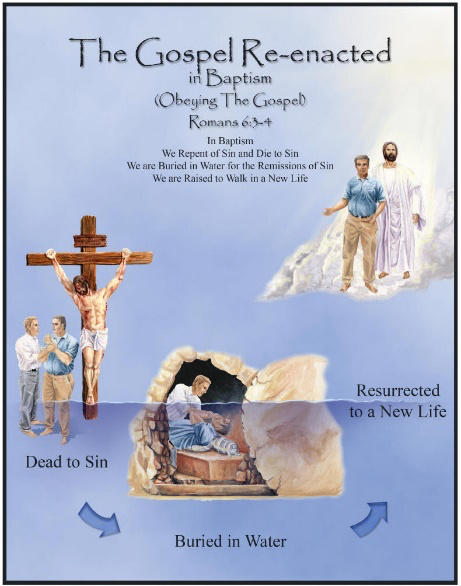
“What shall we say then? Are we to continue in sin that grace may abound? By no means! How can we who died to sin still live in it? Do you not know that all of us who have been baptized into Christ Jesus were baptized into his death? We were buried therefore with him by baptism into death, in order that, just as Christ was raised from the dead by the glory of the Father, we too might walk in newness of life” (Romans 6:1-4). At the heart and core of the Gospel are the Death, Burial, and Resurrection of Jesus Christ (1 Cor. 15:1-3). This blockbuster event is the greatest expression of love and sacrifice anyone has ever known (Rom. 5:6-8). Yet, these events also parallel the Christian’s conversion and commitment to the Savior who died for them (2 Cor. 5:14-15). Notice Christ’s Death, Burial, and Resurrection and ours.
Christ’s Death, Burial, and Resurrection—And Ours
“What shall we say then? Are we to continue in sin that grace may abound? By no means! How can we who died to sin still live in it? Do you not know that all of us who have been baptized into Christ Jesus were baptized into his death? We were buried therefore with him by baptism into death, in order that, just as Christ was raised from the dead by the glory of the Father, we too might walk in newness of life” (Romans 6:1-4). At the heart and core of the Gospel are the Death, Burial, and Resurrection of Jesus Christ (1 Cor. 15:1-3). This blockbuster event is the greatest expression of love and sacrifice anyone has ever known (Rom. 5:6-8). Yet, these events also parallel the Christian’s conversion and commitment to the Savior who died for them (2 Cor. 5:14-15). Notice Christ’s Death, Burial, and Resurrection and ours.
Christ’s Death & Mine. The Scriptures teach that Jesus died for sin (2 Cor. 5:21; 1 Peter 2:24). He suffered in his physical body so that we don’t have to face the spiritual penalty of sin (John 3:16; Isa. 53:4). The agony, torment, and pain he suffered was to free men from the slavery of sin (Rom. 6:17). In parallel to that, the Christian dies to sin when he obeys the Gospel. Paul asked the rhetorical question, “How shall we who died to sin live any longer in it” (Romans 6:2)? Of course, the answer is You Can Not. When I make the decision to obey the Gospel, I put to death my “members which are on the earth: fornication, uncleanness, passion, evil desire, and covetousness, which is idolatry” (Col 3:5). When we repent of sin, we turn from it and turn to God (1 Thess. 1:9-10). At this point, I have reenacted Christ’s death for sin by putting sin to death in my life.
Christ’s Burial & Mine. As we read the story of Jesus' death, the Scriptures next emphasize His burial. Jesus prophesied that he would not only die but be buried in the grave for three days (Mt. 12:40). And the Scriptures record that is exactly what happened (Mark 15:42-47). With this event in mind, Paul now draws a parallel between Jesus’ burial and ours when He says, “Therefore we were buried with Him through baptism into death” (Rom. 6:4). In fact, Paul would say it is at the point of our burial in water when we contact the saving death of Jesus Christ. Notice these words: “Or do you not know that as many of us as were baptized into Christ Jesus were baptized into His death?” (Rom. 6:3). Just as it was necessary for Christ to be buried in the earth to show His power over death, we must be buried with Him in water to contact His death that saves (Mark 16:16; 1 Peter 3:21; Acts 2:38). With this truth in mind, why would anyone ever want to deny the essentiality of baptism and its correlation to Jesus’ death?
Christ’s Resurrection & Mine. The climax of the Gospel story is found in Jesus’ resurrection and ultimate victory over death. The Scriptures teach this is the point at which Jesus dealt the ultimate death blow to death itself and overcame its power over mankind (Heb. 2:14-15). When Christ arose from the grave, He gave living proof to all men that He is the Resurrection and the life and whoever believes in Him will never really die (John 11:25). Just as Christ rose from the dead, the Christian also reenacts the resurrection in His obedience to the Gospel. The Holy Spirit says, “just as Christ was raised from the dead by the glory of the Father, even so, we also should walk in newness of life” (Rom. 6:4). When one comes out of the water as a new creature (2 Cor. 5:17) he now has a new outlook and a new purpose in life (Phil. 1:19-21). And, just as Jesus vanquished death through His resurrection, we have been set from the bonds of sin and death by obeying the Gospel (Rom. 6:17-18).
So What/Now What? How wonderful it is that every person who has obeyed the Gospel is a living and breathing testament to the Death, Burial, and Resurrection of our Lord and Savior Jesus Christ. Truly, we should let our light so shine before men that they may see our good works and glorify our Father who is in Heaven (Mt. 5:16). Like the Macedonians, may it be said of us “You are our epistle…known and read by all men” (2 Cor. 3:2). Also, my friend, if you have not obeyed the Gospel then the Death, Burial, and Resurrection of our Lord has not become a part of your life yet, and you are still lost in sin (Rom. 6:23). But the good news is you can do something about that today. Won’t you submit to God’s will by dying to sin (Luke 13:3), being buried with Christ in baptism (Rom. 6:1-4), and rising out of the watery grave victorious over sin and death with a new outlook on life? We hope and pray that each of us will treasure our Lord’s sacrifice by living in such a way that it brings honor to Him every day! –Ben Bailey

Principles for Good Christian Living - Ben Bailey
“Rejoice always, pray without ceasing, in everything give thanks; for this is the will of God in Christ Jesus for you. Do not quench the Spirit. Do not despise prophecies. Test all things; hold fast what is good. Abstain from every form of evil.” (1 Thess. 5:16-22). To encourage Christians in their faith, Paul concludes his letter to the Thessalonians with some final admonitions for Christian Living. Notice these 4 principles for good Christian living.
Principles for Good Christian Living
“Rejoice always, pray without ceasing, in everything give thanks; for this is the will of God in Christ Jesus for you. Do not quench the Spirit. Do not despise prophecies. Test all things; hold fast what is good. Abstain from every form of evil.” (1 Thess. 5:16-22). To encourage Christians in their faith, Paul concludes his letter to the Thessalonians with some final admonitions for Christian Living. Notice these 4 principles for good Christian living.
Principle #1: Be Joyful (1 Thess. 5:16). Joy should be a hallmark characteristic of every Christian’s life. Paul encouraged us to “rejoice in the Lord always, and again I say rejoice” (Phil. 4:4). Everyone wants to find joy and having joy always makes a person’s life better. Solomon taught us in the Book of Proverbs that a happy spirit is good for the soul. He said, “A merry heart does good, like medicine” (Prov. 17:22). If we are going to win the world to Jesus, we need to show people the joyous life of a Christian.
Principle #2: Be Prayerful (1 Thess. 5:17). Isn’t it great to know you are not in the fight of faith alone (1 Tim. 6:12; Phil. 4:13)? As a child of God, we have one of the most powerful spiritual tools you could ever imagine—We can communicate with the All-Powerful Creator of the Universe, and we know He hears us and knows our needs. The Apostle John said, “This is the confidence we have in approaching God: that if we ask anything according to his will, he hears us” (1 John 5:14). Remember, “the effective, fervent prayer of a righteous man overcomes much” (James 5:16).
Principle #3: Be Thankful (1 Thess. 5:18). Eli Wiesel once said, “When a person doesn’t have gratitude, something is missing in his or her humanity.” How true this statement is for a Christian! God wants us to have a thankful heart. Do you remember the haunting question Jesus asked the one leper who returned to give thanks? “Where are the nine?” (Luke 17:17). A thankful person will always make a greater impact on the world, the lost, and in the kingdom of God than one who simply takes things for granted. We could all learn a lot from the word of Zig Ziglar on ingratitude, "Be grateful for what you have and stop complaining -- it bores everybody else, does you no good, and doesn't solve any problems."
Principle #4: Be Careful (1 Thess. 5:19-22). In this section of Scripture Paul mentions 4 areas in which the Christian must be careful. Be careful… (1) Not to quench the spirit (vs. 19)—don’t put out the spirit’s fire in our lives (Jer. 20:9) (2) Not to Reject the Word of God (vs. 20)—Don’t stop listening to God’s Word (Heb. 4:12) (3) To test everything (vs. 21)—Be like the Bereans and search the Scriptures daily (Acts 17:11) (4) To Abstain from every type of evil—Hate what is evil cling to what is good (Rom. 12:9).
In a world that is filled with so much hypocrisy and so many things that are for lack of a better word “fake” let’s be the real thing! Let’s put these 4 principles for good Christian living to use and be the best Christian we can be every day! --Ben Bailey

The Conversion of Saul - Ben Bailey
Toward the end of Paul’s life, he exclaimed “This is a faithful saying and worthy of all acceptance, that Christ Jesus came into the world to save sinners, of whom I am chief (1 Tim. 1:15). There is little doubt that Paul had his former life as a persecutor of Christians in mind when he said these words. Yet, the change from Saul The Persecutor to Paul The Preacher is one of the great conversions of the New Testament. What steps did Saul take to convert to Christianity? Let’s notice Saul’s conversion from Scripture.
Toward the end of Paul’s life, he exclaimed “This is a faithful saying and worthy of all acceptance, that Christ Jesus came into the world to save sinners, of whom I am chief (1 Tim. 1:15). There is little doubt that Paul had his former life as a persecutor of Christians in mind when he said these words. Yet, the change from Saul The Persecutor to Paul The Preacher is one of the great conversions of the New Testament. What steps did Saul take to convert to Christianity? Let’s notice Saul’s conversion from Scripture.
Saul’s great change was necessitated by an acceptance of Jesus and recognition of his sin. On the road to Damascus, Saul is blinded by the great light and accepts the fact that Jesus is the Son of God and the Messiah (Acts 9). He believes in Jesus as the Savior. For a person to be saved today they must also believe in Christ (Jn. 3:16; 8:24). Was Saul saved at the point of belief alone? No.
Saul also recognized and turned away from sin. Saul spent three days in prayer and fasting (Acts 9:9-12). During this time of fasting and prayer Saul made some serious changes in his thinking and in his life. This change is seen in the dedication Paul had to the cause of Christ (Phil. 1:21). For one to be saved today, he must also repent of sin (Luke 13:3,5).
In Saul’s conversion he also confessed that Jesus was the Messiah. When Paul realized that Jesus was talking to him on the road to Damascus he responded by saying, “Lord, what would you have me to do.” In this statement, Paul recognized that Jesus was Lord (master or owner). Today people must confess Jesus if they are going to be saved (Rom. 10:10; Mt. 10:32-33).
Up to this point in Saul’s conversion his sins have not been forgiven. Ananias, the Lord’s servant comes to Saul with one other command from God. Ananias tells Saul, “And now why are you waiting? Arise and be baptized, and wash away your sins, calling on the name of the Lord” (Acts 22:16). Saul was forgiven of his sins when he obeyed all of God’s commands, including the command to be baptized. Why was Saul baptized? Saul was baptized so that his sins could be washed away. In the plan of salvation, it is at the point of baptism that we contact the blood of Jesus (Rev. 1:5). There are a host of passages that teach the necessity of baptism in salvation (Mk. 16:16; Acts 2:38; Gal. 3:27; 1 Pet. 3:21; Jn. 3:3-5). If men and women are going to be saved today, they too must be baptized for the remission of their sins (Acts 2:38).
Friend, have you been converted like Saul? Was your conversion according to what the Scriptures teach? If not, then you have not been saved from sin. If you have questions or concerns, we would be happy to help you. May God help you to make the right decision concerning salvation.
--By Ben Bailey
Preach the Word! - Ben Bailey
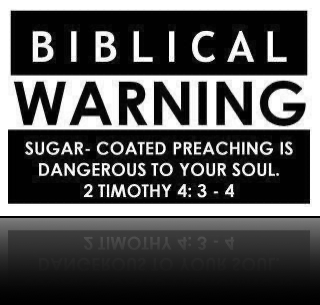
The messianic prophet Zechariah illustrated the urgency of preaching God’s Word when he said, “Run, speak to this young man…” (Zechariah 3:2). Just as in the Old Testament days, an interesting parallel is found in the urging of Phillip to teach the Ethiopian Eunuch. The Scripture records that Phillip “ran to him, and heard him reading the prophet Isaiah, and said, ‘Do you understand what you are reading?’” (Acts 8:30). Both of these verses illustrate the urgent need for men and women to hear the powerful Word of God. Since God chose the foolishness of preaching to save the lost (1 Corinthians 1:21), this places a dire need upon God’s people to preach and teach only God’s Word (2 Timothy 4:2; Acts 8:3-4). What then does it mean to really teach God’s Word?
The messianic prophet Zechariah illustrated the urgency of preaching God’s Word when he said, “Run, speak to this young man…” (Zechariah 2:4). Just as in the Old Testament days, an interesting parallel is found in the urging of Phillip to teach the Ethiopian Eunuch. The Scripture records that Phillip “ran to him, and heard him reading the prophet Isaiah, and said, ‘Do you understand what you are reading?’” (Acts 8:30). Both of these verses illustrate the urgent need for men and women to hear the powerful Word of God. Since God chose the foolishness of preaching to save the lost (1 Corinthians 1:21), this places a dire need upon God’s people to preach and teach only God’s Word (2 Timothy 4:2; Acts 8:3-4). What then does it mean to really teach God’s Word?
Let the Lion Roar! The bold prophet Amos recorded, “A lion has roared! Who will not fear? The Lord God has spoken! Who can but prophesy?” (Amos 3:8) If you have ever been to the zoo, you can relate to this passage. Think back to the last time you were at the zoo, and you heard a lion roar. No matter where you are, the lion roaring is a sound that strikes attention in your heart and a healthy fear for such an awesome beast. Like the lion roaring, God’s Word should cause us to sit up and listen very carefully. To the seven churches of Asia, Jesus said, “he who has an ear, let him hear what the Spirit says” (Revelation 2:7; 1 Timothy 4:1). God’s people are encouraged to: “take heed what you hear” (Matthew 4:24; Hebrews 2:1); “take heed how you hear” (Luke 8:18); and God said, “This is my beloved Son in whom I am well pleased. Hear Him!” (Matthew 17:5). When God’s Word is preached, like the roaring of a lion, we need to have an attentive heart and a healthy respect for its awesome power.
God’s Word in Your Mouth. To the young and insecure prophet Jeremiah, God said, “Behold, I have put My words in your mouth” (Jeremiah 1:9). The problem with much of the preaching today is that it is backward from what God told Jeremiah. A lot of today’s preaching is simply man’s word in man’s mouth. Sadly, that’s not what God commanded nor will it save lost souls (Hebrews 4:12). Throughout Scripture we find the need to preach God’s Word reinforced. Paul told Timothy to “Preach the Word” (2 Timothy 4:2). Peter instructed Christians to “speak as the oracles of God” (1 Peter 4:11). After being spit out on the beach by a large fish near Nineveh, God told the reluctant prophet Jonah, "Arise, go to Nineveh, that great city, and preach to it the message that I tell you." (Jonah 3:2). The need for preaching what God tells us is directly related to the power of God’s Word to save. If the implanted word saves (James 1:21); and the gospel is the power of God to salvation (Romans 1:16); and God chose the foolishness of preaching to save (1 Corinthians 1:21), then we desperately need to let our mouth be the tool for God’s Word to echo forth to the masses (Jeremiah 22:29).
Not Public Enemy #1. When men of God boldly preach the whole counsel of God which reaches down inside of us and urges us to change our lives - even if we don’t like it, God’s preachers are not our enemy! After sharply rebuking the Galatian Christians in many areas, Paul asked this question: “Have I therefore become your enemy because I tell you the truth?” (Galatians 4:16). Maybe you’ve heard the expression, don’t kill the messenger if you don’t like the message. How true that is as it relates to preaching God’s word. Have you ever sat in a sermon that made you feel uncomfortable, caused you to squirm a little in your seat, and really reached down inside you and challenged you to change your spirit in areas you knew needed changing? How do we respond to that awkward and uncomfortable feeling that true Gospel preaching creates? Either we accept truth and change, or we can get mad at the messenger as a way to avoid doing what we know is right. Too many times the latter occurred in Scripture. Why do you think King Ahab said to Elijah, “Is that you, you troubler of Israel”? (1 Kings 18:17). Why was Jeremiah thrown in the dungeon (Jeremiah 20)? Why were the Jews so indignant at Jesus that they cried, “Crucify Him?” (John 19:6). Why was Paul imprisoned? Why was John exiled to Patmos? All of these are examples of persecuting the messenger as a way of avoiding the changes that God’s Word demands. When God’s Word demands change, you (and I) need to “Humble yourselves under the mighty hand of God, that He may exalt you in due time” (1 Peter 5:6).
While Jesus used practical illustrations to help people understand the truth (Mark 4:34), too much of today’s preaching is filled with silly anecdotes, funny stories, and cute illustrations that never really get to the heart of the matter—helping men and women to change their will to God’s will (Acts 3:19). In a day and age where there is a famine for Bible preaching (Amos 8:11-12), may each Christian be encouraged to boldly proclaim, “Thus saith the Lord!” (Zechariah 1:3). In seeking and saving lost souls, let’s listen when the lion roars, use our mouths as a tool to let God’s word echo forth, and make changes in our lives when Gospel preaching demands it! --Ben Bailey

How to Overcome a Sinful Past - Ben Bailey
A person must also be ashamed of their sinful past. Too often, people who have lived a life of sin go around bragging about the “sins” they used to commit. Sin should be something that causes us great shame, not gives us an avenue to boast (Rom. 6:21). How sad it is when we reach a point that we can no longer blush over sin (Jer. 8:12).
Sometimes in our Christian life we really mess up don’t we? We know what the Bible says. We know what we ought to do. Yet, there are times when we do just the opposite of what is right and we sin. When a person really messes up, how do they overcome that sinful past?
He must recognize and admit the sin in his life. Unless we are willing to says, “I have sinned”, we cannot be forgiven by God (1 Sam. 12:21ff). The beloved Apostle John said, “If we say that we have no sin, we deceive ourselves, and the truth is not in us. If we confess our sins, He is faithful and just to forgive us our sins and to cleanse us from all unrighteousness” (1 Jn. 1:9-10). Someone has properly stated that to know yourself diseased is half the cure.
A person must also be ashamed of their sinful past. Too often, people who have lived a life of sin go around bragging about the “sins” they used to commit. Sin should be something that causes us great shame, not gives us an avenue to boast (Rom. 6:21). How sad it is when we reach a point that we can no longer blush over sin (Jer. 8:12).
To overcome a sinful past a person must deal with sin in a God-approved way. The only way to deal with sin properly is through obedience to Jesus Christ (Matt. 7:21; Heb. 5:8-9). Jesus made it clear that to deal with sin one must believe in Him (Jn. 8:24), repent of past sins (Luke 13:3), confess Him as Lord (Rom. 10:10), be baptized for the remission of one’s sins (Acts 2:38; Mark 16:16), and be faithful to death (Rev. 2:10).
Finally, to overcome a sinful past one must put the past behind him and move forward. The Apostle Paul said, “Brethren, I do not count myself to have apprehended; but one thing I do, forgetting those things which are behind and reaching forward to those things which are ahead, I press toward the goal for the prize of the upward call of God in Christ Jesus” (Phil. 3:13-14). To overcome the past, we must put the past behind us and look forward to the future. If God has forgotten our sins (Heb. 8:12-13), can’t we? It has been aptly stated, “Those who live in the past are doomed to repeat its mistakes.”
All of us have made mistakes in life that we are not proud of. The difference between a person who has overcome sin and one who has not is very simple--Jesus Christ. Have you dealt with sin a God-approved way? If not, why not? Why not do that today? May God help each of us to deal with sin in a God approved way!

A Haunting Question - Ben Bailey
When the Son of man comes, will He really find faith on the earth?” (Luke 18:8). This question Jesus asked arose from a discussion of persistence in prayer. This question of the Lord is designed to provoke an evaluation of our faith. The Apostle Paul said, “Examine yourselves as to whether you are in the faith. Test yourselves” (2 Cor. 13:5). How can we make sure the Lord finds faith when he comes?
A Haunting Question
“When the Son of man comes, will He really find faith on the earth?” (Luke 18:8). This question Jesus asked arose from a discussion of persistence in prayer. This question of the Lord is designed to provoke an evaluation of our faith. The Apostle Paul said, “Examine yourselves as to whether you are in the faith. Test yourselves” (2 Cor. 13:5). How can we make sure the Lord finds faith when he comes? Let me offer a couple of things we can do to ensure faith.
The only way to ensure the Lord finds his people being faithful is to follow the words of Faith, the Bible. The way we receive faith is through the hearing of God’s Word. “Faith comes by hearing and hearing by the Word of God” (Rom. 10:17). The more of the Bible we put into our hearts and lives, the more faith we can expect to receive. For this to be true we must be doers of the Word and not hearers only (James 1:22-25).
For the Lord to find faith when he comes we must remain faithful. Jesus said, “Be faithful unto death and I will give you the crown of life” (Rev. 2:10). We must take up our cross daily and follow Jesus (Luke 9:23). Paul said, “I have been crucified with Christ. It is no longer I who live, but Christ who lives in me…” (Gal. 2:20). If Christ is going to find faith when he returns, we must faithfully follow His Word (Mt. 7:21).
Dear friend, the only way Jesus will find faith in your life and mine is if we are obedient to His Word. Have you truly obeyed the gospel? Have you accepted the faith which was once for all delivered to the Saints (Jude 3). To become a faithful child of God you must hear God’s word (Rom. 10:17), believe in Jesus as the Son of God (Jn. 8:24), repent of past sins (Luke 13:3), confess Jesus before men (Rom. 10:10) and be baptized in water for the forgiveness of your sins (Acts 2:38). Once you have obeyed the gospel, then you must live faithful until death (Rev. 2:10). May God help each of us to have faith when Christ comes!
Article - Your Thoughts Are NOT God’s Thoughts
The LORD truthfully stated in Isaiah 55:8, “For My thoughts are not your thoughts, nor are your ways My ways.” Consider the following thoughts that are contrary to God’s: (1) “You are not supposed to judge” versus “…judge with righteous judgment” (John 7:24); (2) “It is alright to have different interpretations of the Bible” versus “…be perfectly joined together in the same mind and in the same judgment” (1 Corinthians 1:10); (3) “Salvation is by grace alone plus nothing; therefore, we do not contribute one whit to our salvation” versus “For by grace you have been saved THROUGH FAITH” and “…BE BAPTIZED, and WASH AWAY YOUR SINS” and “…as you have always OBEYED…WORK out your own salvation” (Ephesians 2:8; Acts 22:16; Philippians 2:12); (4) “Salvation is by faith only” versus “…justified by WORKS, and not by faith only” (James 2:24); (5) “Water baptism is not essential to be saved” versus “…in the days of Noah…eight souls were saved through water. There is also an antitype which now saves us – BAPTISM” (1 Peter 3:20-21); (6) “It is alright to live with each other without getting married” versus “Marriage is honorable among all, and the bed is undefiled; but fornicators and adulterers God will judge” (Hebrews 13:4). It is time for you to denounce your thoughts and feelings and submit to the mind and will of Christ (Philippians 2:5)!

This material is copyrighted by The Gospel of Christ and its authors. This information is free to use in its entirety without further consent, however, modifications should not be made without contacting mail@thegospelofchrist.com for permission. Any and all images contained herein are believed to be free for all distribution and content.
Article - Repent And Be Baptized For The Remission Of Sins (Part 1)
Several years ago Richard Heatherly (“Pastor” of a Baptist Church) wrote an article in a Fayetteville, Tennessee sales paper in which he boldly admitted that Acts 2:38 “clearly relates baptism to the remission of sins.” I was encouraged by Richard’s willingness to make such an admission as he proceeded to tackle such a controversial topic in a thorough manner. In order for religious people to fulfill God’s command to “speak the same thing,” have “no divisions” (including NO denominations) and “be perfectly joined together in the same mind and in the same judgment,” we must have an open Bible, an open mind and an open discussion (ignoring one another has accomplished nothing all these years; study Acts 17:11; 18:26 and 1 Corinthians 1:10).
The title of Richard’s article asked, “In What Sense Does Baptism Remit Sins?” Richard’s answer was: metaphorically, symbolically, ceremonially. Do you the reader gather such an idea when you study Acts 2:36-38? After the Jewish audience was accused by Peter of crucifying the Christ, they were cut to the heart and ask the apostles, “What shall we do?” Did the Jews want to know what they needed to do to receive remission of sins symbolically? Or were they seeking literal forgiveness? The two things Peter commanded his audience (and all of us) to do in order to receive the remission of sins were 1) repent and 2) be baptized. Why did Richard not take notice or mention that Acts 2:38 also says repent for the remission of sins? Baptism remits sins in the same way that repentance does (Acts 3:19). For Richard to consistently hold on to his doctrine, he would have to also teach that a sinner repents in order to remit his sins symbolically. If not, why not? (see part 2 for a final analysis of Acts 2:38).
This material is copyrighted by The Gospel of Christ and its authors. This information is free to use in its entirety without further consent, however, modifications should not be made without contacting mail@thegospelofchrist.com for permission. Any and all images contained herein are believed to be free for all distribution and content.
Article - Saving the Lost
It has been estimated that there were over four million Jews/Israelites living in the 1st century (http://en.wikipedia.org/wiki/Historical_Jewish_population_comparisons) when Paul wrote the following inspired words of God in Romans 10:1-3, “Brethren, my heart’s desire and prayer to God for Israel is that they may be saved. For I bear them witness that they have a zeal for God, but not according to knowledge. For they being ignorant of God’s righteousness, and seeking to establish their own righteousness, have not submitted to the righteousness of God.” These verses help explain why Paul was such an aggressive soul winner not only of the Jews but also the Gentiles (Proverbs 11:30; James 5:20). First, Paul genuinely desired to save others (do you? Or are you too busy?). Second, Paul prayed to God for those whom he wanted to save (do you?). Third, Paul realized that according to God’s will there are only two categories of people: those who are saved AND those who are lost (are you saved or lost? Mark 16:16; John 3:16; 1 Peter 4:18). Fourth, Paul applied the righteous judgment of God to the Jewish religion and made the righteous and loving judgment that the Jews (that is, those who adhered to the doctrines and traditions of the Jewish religion) were among the category of the lost (John 7:24; Acts 13:44-46; Galatians 1:13-14; 2 Thessalonians 1:4-9). Fifth, Paul realized that although the Jews had some positive and, to a certain degree, sincere traits (a zeal for God), their lost state was due mainly to two shortcomings: the Jews did not have the proper, scriptural knowledge of the truth AND they had not submitted to/obeyed the righteousness of God/the gospel (Matthew 7:21-23; John 8:32; 17:17; Acts 5:32; Romans 2:8; 6:16-17; 2 Thessalonians 1:7-9; Hebrews 5:8-9; 1 Peter 1:22; 4:17).
This material is copyrighted by The Gospel of Christ and its authors. This information is free to use in its entirety without further consent, however, modifications should not be made without contacting mail@thegospelofchrist.com for permission. Any and all images contained herein are believed to be free for all distribution and content.
Article - Jesus Was a Historical Man (part 5)
Other sources outside of God’s word that confirm Jesus’ historicity (continued from part 4): (5) SUETONIUS (A.D. 120), pagan, Roman historian, wrote, “Because the Jews at Rome cause continuous disturbance at the instigation of Chrestus (Christ), he [Claudius] expelled them from the city” (Claudius, 25:4; note that in Acts 18:2 Luke mentions this expulsion by Claudius); (6) PLINY the Younger (A.D. 61 – c. 112), pagan lawyer, author and magistrate of Rome. Around A.D. 110-111, Pliny was sent by the Roman emperor Trajan to govern the affairs of the region of Bithynia. He wrote to the emperor: “Having never been present at any trials of the Christians, I am unacquainted with the method and limits to be observed either in examining or punishing them” (Letters). Pliny used the term “Christian” or “Christians” seven times in his letter. He also used the name “Christ” three times to refer to the originator of the “sect.” He noted that those who had professed Christianity “affirmed, however, the whole of their guilt, of their error, was, what they were in the habit of meeting on a certain fixed day before it was light, when they sang in alternate verses a hymn to Christ, as to a god, and bound themselves by a solemn oath, not to any wicked deeds…” (Epistles X. 96). It is inconceivable that a non-existent figure could have generated such a societal force as world-shaking as Christianity. There is no logical or reasonable way to explain how the Christian system started and grew so rapidly except for the fact that adherents knew of Jesus’ life, death and resurrection. Christianity itself is a monument to the vibrant presence of God’s Son in history. The testimonies and evidence are clear by advocates and enemies of Jesus that Jesus did indeed exist.
This material is copyrighted by The Gospel of Christ and its authors. This information is free to use in its entirety without further consent, however, modifications should not be made without contacting mail@thegospelofchrist.com for permission. Any and all images contained herein are believed to be free for all distribution and content.
Article - Jesus Was a Historical Man (part 3)
Other sources outside of God’s word that confirm Jesus’ historicity (continued from part 2): (4) THALLUS (A.D. 52) was one of the first historical Gentile writers who mentioned Christ. Christian writer JULIUS AFRICANUS (221 A.D.) comments about Thallus: “Thallus, in the third book of his histories, explains away this darkness as an eclipse of the sun-unreasonably, as it seems to me. Unreasonably, of course, because a solar eclipse could not take place at the time of the full moon, and it was the season of the Paschal full moon that Christ died.” Julius is referring to the Gospel accounts of the darkness which fell upon the land during Christ’s crucifixion (Luke 23:44-45). Because this event was so well known, non-believers felt compelled to give a naturalistic explanation for it. However, even Thallus was not fully convinced of his own “natural” explanation. (1/113); (5) JUSTIN MARTYR (A.D. 150), Christian apologist and philosopher, wrote in his Defence of Christianity to the Emperor Antonius Pius, and referred him to Pilate’s report. Justin supposed it was preserved in the imperial archives. But the words, “They pierced my hands and my feet,” he says, “are a description of the nails that were fixed in His hands and His feet on the cross; and after He was crucified, those who crucified Him cast lots for His garments, and divided them among themselves; and that these things were so, you may learn from the ‘Acts’ which were recorded under Pontius Pilate.” Later he says: “That He performed these miracles you may easily be satisfied from the ‘Acts’ of Pontius Pilate.” (Apology I. 48); (6) MARA BAR-SERAPION, non-Christian philosopher, wrote a letter some time later than A.D. 73 to his son while he was in prison to encourage him to seek wisdom. He pointed out that those who persecuted wise men were overtaken by misfortune. He mentions the deaths of Socrates, Pythagoras and Christ (1/114; see Robert E. Van Voorst, Jesus Outside the New Testament: An Introduction to the Ancient Evidence, Wm. B. Eerdmans Publishing, 2000. p 54); (7) CLEMENT of Rome, “Apostolic Church Father” of the 1st century A.D., wrote: “The Apostles received the Gospel for us from the Lord Jesus Christ; Jesus Christ was sent forth from God” (Corinthians 42); (8) IGNATIUS of Antioch, “Apostolic Church Father” of the 1st century A.D., wrote: “Jesus Christ who was of the race of David, who was the Son of Mary, who was truly born and ate and drank, was truly persecuted under Pontius Pilate, was truly crucified and died…” (Letter to the Trallians); (9) POLYCARP of Smyrna, “Apostolic Church Father” of the 2nd century A.D., spoke passionately of Christ and wrote against certain heretics of his day. IRENAEUS, “Apostolic Church of the 2nd century, said that Polycarp had personal association with the apostle John, and with others who “had seen the Lord” (Eusebius V. XX).
This material is copyrighted by The Gospel of Christ and its authors. This information is free to use in its entirety without further consent, however, modifications should not be made without contacting mail@thegospelofchrist.com for permission. Any and all images contained herein are believed to be free for all distribution and content.
Article - Jesus Was a Historical Man (part 2)
There is more evidence for the historicity of Jesus of Nazareth (c. 4 B.C. – A.D. 30) than any other person of antiquity. There are at least 8 inspired writers of the New Testament, 20 early “Christian” authors (“Church Fathers”), 4 heretical writers and 7 additional non-Christian sources that make specific mention of Jesus within 200 years of Jesus’ life. The mention of Jesus from these 39 known ancient, historical writers actually outnumbers the mention of the leader of the entire Roman Empire Tiberius Caesar (ruled A.D. 14-37 during Jesus’ earthly life) by a ratio of 4:1! This article will consider only a few of the evidences of Jesus from ancient, uninspired writings: (1) FLAVIUS JOSEPHUS (A.D. 37-100), Jewish historian, wrote in his “Antiquities of the Jews”: “Now there was about this time Jesus, a wise man, if it be lawful to call him a man; for he was a doer of wonderful works, a teacher of such men as receive the truth with pleasure….He was Christ. And when Pilate, at the suggestion of the principal men amongst us, had condemned him to the cross, those that loved him at the first did not forsake him; for he appeared to them alive again the third day; as the divine prophets has foretold these and ten thousand other wonderful things concerning him. And the tribe of Christians, so named from him, are not extinct at this day.” (18.3.3). Josephus also wrote: “he assembled the Sanhedrin of judges, and brought before them the brother of Jesus, who was called Christ, whose name was James.” (20.9.1); (2) TALMUD (A.D. 200-500): these writings of Jewish traditions claim that Jesus was born out of wedlock after his mother was seduced by a Roman soldier named Pandera. They refer to Jesus’ miracles as “magic” and state that He claimed to be God. They also mention Jesus’ execution: “On the eve of the Passover they hanged Jesus…” (Baraila, Babylonia Sanherdrin, 43a); (3) TERTULLIAN (A.D. 197), theologian in defense of Christianity, wrote: “Tiberius accordingly, in those days the Christian name made its entry into the world, having himself received intelligence from the truth of Christ’s divinity, brought the matter before the senate, with his own decisions in favor of Christ. The senate, because it had not given the approval itself, rejected his proposal. Caesar held to his opinion, threatening wrath against all of the accusers of the Christians” (Apology, V. 2). [Continued in part 3]
This material is copyrighted by The Gospel of Christ and its authors. This information is free to use in its entirety without further consent, however, modifications should not be made without contacting mail@thegospelofchrist.com for permission. Any and all images contained herein are believed to be free for all distribution and content.
Article - Just exactly who are the churches of Christ and what do they believe?
“Just exactly who are the churches of Christ and what do they believe?” Let me begin by saying that the churches of Christ are not a part of the reformation movement, or the restoration movement that occurred in America over a century ago. The churches of Christ are not a denomination because the Bible teaches denominationalism and division is a sin (1 Corinthians 1:10-13). Just who are the churches of Christ then?
Who are they? The churches of Christ are trying to be the church of the first century that we read of in the Bible. They were not established by any man, but they were established by Jesus Christ in the first century (Matthew 16:13-18). The churches of Christ have no man made creed (Proverbs 16:25) but strive to follow the Bible only (Colossians 3:17). The churches of Christ have no human leader, such as a pope, cardinal, or head of the church, except for Jesus Christ (Ephesians 1:20-22). The churches of Christ are called by a Bible name, not the name of a man or great religious leader (Acts 4:11-12, 1 Corinthians 3:11). In short, the churches of Christ are trying to be the church we read of in the Bible without any man made additions or subtractions (See Revelation 22:18-19).
What do they believe? The fundamental belief of the New Testament church was to do things exactly as Jesus and the Apostles had told them to do (Romans 5:4, 1 Corinthians 4:6). This is what the churches of Christ today believe also. We believe in restoring the New Testament church back to its original state as seen in the Bible. For example, the first century church met on the first day of the week to partake of the Lord’s Supper (Acts 20:7) and the churches of Christ believe this is the same pattern we should follow today (Acts 2:42). In fact, one might wonder where the authority for partaking of the Lord’s Supper on Easter and Christmas is at in the Bible. In addition, in the churches of Christ you will not find mechanical instruments of music to worship God with. We do not have these because they are not commanded in the New Testament. God tells us specifically to sing and make melody in our hearts (Ephesians 5:19; Colossians 3:16). One might wonder where an example of the New Testament church using instruments is in the Bible. There is no authority for the use of mechanical instruments and we cannot go beyond what is written (1 Corinthians 4:6, Proverbs 30:6). While these are definitely not all the beliefs of the churches of Christ, these are worthy of our consideration.
The churches of Christ are not trying to bind where God has not bound, but we are also not trying to loose where God has not allowed us. We simply want to do what the Bible says and put our faith in God not men.
This material is copyrighted by The Gospel of Christ and its authors. This information is free to use in its entirety without further consent, however, modifications should not be made without contacting mail@thegospelofchrist.com for permission. Any and all images contained herein are believed to be free for all distribution and content.
Article - Is Your Name in the Book of Life?
In Revelation 20:12, John speaks of the Judgment Day on which books are opened. One of those books is described as the Book of Life. It is called the Lamb’s Book of Life because Jesus was slain to make redemption available through His shed blood (Revelation 1:5-6; 5:8-13; 7:10; 13:8). It is the Book of eternal Life because only people whose names are written in it will enter into eternal life in the heavenly city (Revelation 7:17; 21:10, 27; 22:3-5). Those whose names are not written in God’s Book will be cast into the lake of fire (Revelation 20:14-15). Therefore, only the names of God’s children are written in the Book. But even a child of God can have his name taken out of the Lamb’s Book and, hence, forfeit his eternal salvation. For instance, children of God of the Old Testament were taken out of God’s Book because of their impenitent sin and because they turned their hearts away from God (Exodus 32:31-33; Deuteronomy 29:14-15, 18-20). Children of God of the New Testament are taken out of it because they do not overcome/remain faithful and/or they take away from God’s words (Revelation 2:10; 3:5; 22:19). Other names not found in the Book of Life are those who worshiped the sea beast (beast = the Roman government/emperors) and those who defile, cause an abomination or lie (Revelation 13:1, 8; 17:8; 21:27). If you want to be in the Book of Life (and stay in it), you must be a faithful Christian worker who endures to the end (Philippians 4:3; Revelation 3:4-5; also read Malachi 3:16-17). Is your name in the Book of Life? Has it been taken out? Examine yourself whether you are in the faith (2 Corinthians 13:5).
This material is copyrighted by The Gospel of Christ and its authors. This information is free to use in its entirety without further consent, however, modifications should not be made without contacting mail@thegospelofchrist.com for permission. Any and all images contained herein are believed to be free for all distribution and content.
Article - I Will Give You Rest
Some of the most beautiful words of our Lord are recorded in Matthew 11:28-30. Jesus said, “Come to Me, all you who labor and are heavy laden, and I will give you rest. Take My yoke upon you and learn from Me, for I am gentle and lowly in heart, and you will find rest for your souls. For My yoke is easy and My burden is light." This beautiful language appeals to our hearts in minds in several ways.
First, it reminds us of God’s great love for all people. Jesus simply says, “Come to me, all…”. This teaches us that God is not prejudiced or biased toward anyone. God wants all men to be saved and come to a knowledge of the truth (1 Timothy 2:4). Jesus tasted death for every man (Hebrews 2:9; 10:12). God sent his own Son to die for the world because He loved us so much (John 3:16).
These words also appeal to us because of the promised rest. Life sometimes wears us out. Paul said, “For to me to live is Christ and to die is gain” (Phi. 1:21). You can almost hear Paul’s desire to depart this life in that text. For those who truly labor for the Lord and are laden with many struggles in this life, the promised rest of Heaven is our hope. The words of the Hebrew writer should also encourage each one of us. He said, “Therefore remains a rest for the people of God” (Hebrews 4:9).
Also, this text portrays great beauty because it expresses the gentleness and compassion of Christ. Jesus was not a militant zealot. He is a kind and compassionate Savior. This is why Jesus said, “Take My Yoke upon you and learn from Me, for I am gentle and lowly in heart.” The gentleness and compassion of Christ is exhibited best on the cross of Calvary. Jesus was led as a lamb to the slaughter or as a sheep to its sheerer He opened not His mouth (Isaiah 53). Jesus had the power to call down legions of angels, yet he allowed sinful man to bind Him (Matthew 26:53.
Finally, these words strike close to our heart because of the simplicity of following Christ. Jesus assured us, “My yoke is easy and my burden is light.” This portrays to us that being a Christian is something that can and must be done. Paul reminded us, “I can do all things through Christ who strengthens me” (Philippians 4:13). It does not take a degree in rocket science or a doctorate of divinity to become a child of God. Jesus made it so simple when He said, “He that believes and is baptized will be saved, he that believes not will be condemned” (Mark 16:16). Jesus also taught us the importance of repentance (Luke 13:3) and confession (Matthew 10:32-33). If you are willing to believe in Jesus, repent of your sins, confess him before men, be baptized for the forgiveness of your sins (Acts 2:38) and live faithful to Christ you can have the promised rest Jesus assured us of. May God help us not just to realize the beauty of this text, but to apply its principles to every day life!
This material is copyrighted by The Gospel of Christ and its authors. This information is free to use in its entirety without further consent, however, modifications should not be made without contacting mail@thegospelofchrist.com for permission. Any and all images contained herein are believed to be free for all distribution and content.
Article - Jesus Was a Historical Man (part 1)
There is more evidence for the historicity of Jesus of Nazareth (c. 4 B.C. – A.D. 30) than any other person of antiquity. Even our dating system centers on Jesus’ existence (B.C. means “before Christ” and A.D. is a Latin phrase anno domini meaning “in the year of our Lord”). This article will consider the primary source of evidence, namely, the New Testament (written c. A.D. 45-95, consisting of 27 books). There are over 5,500 Greek manuscripts and thousands of copies of the New Testament dating as early as A.D. 130 that attest to the fact that Jesus was a man who lived on the earth and was the Son of God. The New Testament was written by at least 8 inspired writers who with their combined efforts make reference to Jesus over 1500 times. Most of these writers were with Jesus for many years (namely, Matthew, Mark, John, James, Peter and Jude). They knew Jesus personally, and as reliable eyewitnesses, they wrote about Him as early as fifteen years after His resurrection. James (Jesus’ brother and perhaps the earliest New Testament writer) was considered a historical person not only by the New Testament but by the first century A.D. Jewish historian Flavius Josephus (c. A.D. 37-100). James wrote around A.D. 45 the following: “James, a servant of God and of the LORD JESUS CHRIST, to the twelve tribes which are scattered abroad: greetings” (James 1:1). John, one of Jesus’ twelve apostles, wrote around A.D. 95: “I…in tribulation…was on the island that is called Patmos for the word of God and for the testimony of JESUS CHRIST” (Revelation 1:9). Another writer of the New Testament by the name of Paul (former enemy of Christ and Christianity and a later eyewitness) wrote around A.D. 56: “…CHRIST died…was buried…rose again the third day…was seen by over five hundred brethren at once…He was seen by me also” (I Corinthians 15:3-8). The New Testament evidence is more than adequate to establish the undeniable fact that Jesus existed and was/is the Son of God.
This material is copyrighted by The Gospel of Christ and its authors. This information is free to use in its entirety without further consent, however, modifications should not be made without contacting mail@thegospelofchrist.com for permission. Any and all images contained herein are believed to be free for all distribution and content.
Article - The Christian Influence
An old Korean Proverb illustrates the power of one’s influence when it says, “Power lasts ten years, influence not more than a hundred.” Sometimes we may think, “Am I influencing anyone? The question asked is really a faulty one. It’s not IF we are influencing anyone, but HOW are we influencing them. All of us are an influence on others either for good, bad, or indifference. What type of influence should a Christian possess? Let’s notice what God says.
Concerning our influence Jesus said, "You are the salt of the earth; but if the salt loses its flavor, how shall it be seasoned? It is then good for nothing but to be thrown out and trampled underfoot by men. You are the light of the world. A city that is set on a hill cannot be hidden. Nor do they light a lamp and put it under a basket, but on a lampstand, and it gives light to all who are in the house. Let your light so shine before men, that they may see your good works and glorify your Father in heaven” (Matthew 5:13-16). Jesus likened our influence to two powerful examples in this text: salt & light. All of us can see the value and effect of these in our everyday life. For example, think back to the most bland and boring meal that you have eaten. Don’t you remember thinking to yourself, “This needs some spice?”. Our influence is that “spice” that adds flavor to life. Oh how we need to add good “spice” to this life. Then, think about the effects of light. When you walk into a room at night the very first thing you do is…turn on the light. Why? Light helps us to see and adds beauty, vividness and life to all it touches. The same is true of our example. Our “light” must shine in such a vivid and beautiful way that others can see it and glorify our God!
Parents especially have an influence on their children. Henry Ward Beecher so eloquently said, “ What a mother sings to the cradle goes all the way down to the coffin.” How parents need to be that good example to set a principle for their children’s lives. Of the lasting effect of parents upon children the Holy Spirit said, “…bring them up in the nurture and admonition of the Lord” (Ephesians 6:4). As the old hymn says, “God give us Christian homes” and especially Christian influence in the home!
As we think about influence may our question not be, “Am I influencing anyone?” But rather, “How am I influencing everyone I come in contact with?” May God help us to be influential for Him!
This material is copyrighted by The Gospel of Christ and its authors. This information is free to use in its entirety without further consent, however, modifications should not be made without contacting mail@thegospelofchrist.com for permission. Any and all images contained herein are believed to be free for all distribution and content.